The answer
Yes, at laxative doses. Magnesium the gut does not absorb draws water into the bowel, which softens stool and moves it along. FDA's laxative rules list magnesium citrate, hydroxide and sulfate as saline laxatives that generally work in half an hour to 6 hours, and in a 4-week trial, 70.6% of women taking 1.5 g of magnesium oxide a day improved, against 25.0% on placebo.
Key numbers
- ½ to 6 hours: FDA requires oral saline laxatives, the magnesium citrate, hydroxide and sulfate products among them, to state that they generally produce a bowel movement in that window. [FDA, Monograph M007]
- 70.6% vs 25.0%: share of women with mild to moderate constipation who met the trial's main goal of overall improvement on 1.5 g of magnesium oxide a day for 28 days, against placebo, in 34 randomized. [Mori et al., 2019]
- 350 mg: NIH's daily upper limit for adults on supplement and medicine magnesium; magnesium in food does not count toward it. [NIH Office of Dietary Supplements]
- 2 hours: the gap MedlinePlus gives between magnesium citrate or hydroxide and other medicines, taken before or after. [MedlinePlus]
- Unknown: how well magnesium citrate, glycinate, lactate, malate or sulfate works for long-term constipation, because only the oxide has been tested in randomized trials, the 2023 US guideline says. [Chang et al., 2023]
Why does magnesium make you poop?
Because the part you do not absorb holds water in the gut. NIH's Office of Dietary Supplements puts the laxative effect down to unabsorbed magnesium salts drawing water osmotically in the intestine and colon, plus stimulation of stomach movement. FDA's laxative rules define a saline laxative as an agent that increases water in the intestine and so promotes a bowel movement.12
The 2023 guideline from the American Gastroenterological Association and the American College of Gastroenterology describes the same step: inside the gut, nonabsorbed magnesium sets up an osmotic gradient that draws water and electrolytes into the bowel.6 For magnesium oxide, a 2021 review traces the chemistry: stomach acid turns it into magnesium chloride, which becomes magnesium bicarbonate and then magnesium carbonate in the intestine, and those salts raise the osmotic pressure of the gut fluid, adding water and volume to the stool.8
The same water pull explains the most common side effect. NIH notes that diarrhea is common when magnesium from supplements or medicines is taken in large doses, and MedlinePlus lists loose, watery or more frequent stools as the usual complaint with magnesium citrate and hydroxide.134
Which type of magnesium makes you poop the most?
The salts sold as laxatives: citrate, hydroxide and sulfate, which FDA lists as saline laxative ingredients, and oxide, which MedlinePlus says may be used as a laxative. Glycinate is the gentle one; Cleveland Clinic says it tends to be easy to absorb and gentle on the stomach. NIH names carbonate, chloride, gluconate and oxide as the forms most often reported to cause diarrhea.2591
Magnesium forms and the bowel, source by source
| Form | What the sources say about the bowel | Sold as | Timing or limit given | Source |
|---|---|---|---|---|
| Citrate | A saline laxative that keeps water in the stool, so bowel movements come more often and the stool is softer; absorbed better than oxide, yet still laxative | Liquid or powder laxative; also in supplements | 30 minutes to 6 hours; no more than 1 week without a doctor | MedlinePlus; FDA; NIH; Cleveland Clinic3219 |
| Hydroxide | A saline laxative that works the same way; also used as an antacid | Suspension, tablet or chewable laxative | 30 minutes to 6 hours; no longer than 1 week without a doctor | MedlinePlus; FDA42 |
| Sulfate | On FDA's saline laxative list; one of the two forms NIH says are absorbed less completely than citrate, chloride, lactate and aspartate | Saline laxative | ½ to 6 hours on the label | FDA; NIH21 |
| Oxide | Poorly absorbed and mainly used as a laxative or antacid; the only form tested in randomized trials for long-term constipation | Tablet or capsule; not on FDA's saline laxative list | No more than 1 week as a laxative without a doctor | Cleveland Clinic; AGA and ACG; MedlinePlus; FDA9652 |
| Glycinate | Bound to the amino acid glycine; easy to absorb and gentle on the stomach; its effect on constipation is untested in trials | Supplement | No laxative timing given | Cleveland Clinic; AGA and ACG96 |
| Carbonate, chloride, gluconate | With oxide, the forms NIH says are most commonly reported to cause diarrhea | Supplements | 350 mg a day upper limit from supplements | NIH1 |
Sources: NIH Office of Dietary Supplements; FDA OTC Monograph M007; MedlinePlus drug pages for magnesium citrate, hydroxide and oxide; the 2023 AGA and ACG guideline; Cleveland Clinic. All read on Oct 22, 2026. Generic names only; brand names in the sources are left out.
Absorption and laxative effect do not line up neatly. NIH says magnesium in the aspartate, citrate, lactate and chloride forms is absorbed more completely than oxide and sulfate, yet citrate is still sold as a laxative, and Cleveland Clinic warns that taking it at bedtime can bring an upset stomach or loose stools.19
How fast does magnesium work for constipation?
Within hours for the saline laxatives, and in under a day for daily magnesium oxide in one trial. MedlinePlus says magnesium citrate and magnesium hydroxide usually cause a bowel movement within 30 minutes to 6 hours, and FDA requires oral saline laxative labels to say they generally work in ½ to 6 hours. Both drug pages say not to use them for more than 1 week unless a doctor says so.342
Daily magnesium oxide is slower. In the second Japanese trial, which set magnesium oxide against senna and placebo, the first spontaneous bowel movement came after 17.9 hours on magnesium oxide, against 22.0 hours on placebo, a 2021 review reports.8 MedlinePlus describes magnesium oxide as a laxative for short-term, rapid emptying of the bowel that should not be used repeatedly.5
Does magnesium help with constipation? What the trials found
In two small trials of magnesium oxide, yes, on bowel movements and stool form, but the evidence base is thin. The 2023 AGA and ACG guideline on long-term constipation conditionally suggests magnesium oxide on evidence it rates as very low in certainty: 47 people on magnesium oxide and 47 on placebo across both trials, 93% of them women, all in Japan.6
The first trial randomized 34 women, about 40 years old on average, with mild to moderate constipation to 0.5 g of magnesium oxide three times a day or placebo for 28 days; 33 were analyzed. Overall improvement was reached by 70.6% on magnesium oxide and 25.0% on placebo, colonic transit time shortened, and average Bristol stool form scores rose by 2.83 points from baseline, against 1.15 on placebo. Response rates for complete spontaneous bowel movements did not differ significantly.7 What those stool form numbers mean is in our Bristol stool chart guide.
In the second, the response rate for overall improvement was 68.3% on magnesium oxide, 69.2% on senna and 11.7% on placebo.8 Pooled, the guideline panel found 3.59 more spontaneous bowel movements a week on magnesium oxide than on placebo, and little to no difference in diarrhea that led to a dose change or stopping. It also flags what is missing: trials ran only 4 weeks, used a dose higher than the 500 mg to 1 g a day it says is common in practice, and tested no other form.6
Magnesium or fiber: what is the difference?
Fiber adds bulk; magnesium adds water. FDA's laxative rules define a bulk-forming laxative as one that increases the bulk volume and water content of the stool, and a saline laxative as one that increases water in the intestine. The labels differ in speed: 12 to 72 hours for bulk-forming fiber, ½ to 6 hours for saline laxatives.2
Fiber and magnesium side by side
| Question | Bulk-forming fiber | Magnesium laxatives |
|---|---|---|
| How it moves stool | Increases the bulk and water content of the stool2 | Unabsorbed salts hold water in the intestine and colon12 |
| How fast, on the label | 12 to 72 hours2 | ½ to 6 hours2 |
| Where the 2023 guideline puts it | A first-line option for long-term constipation, especially when dietary fiber is low; of the fibers it weighed, only psyllium appeared effective6 | Magnesium oxide conditionally suggested, on very low certainty evidence; other forms untested6 |
| Main caution the sources give | Take it with enough fluid2 | Kidney disease, other medicines and too high a dose136 |
Sources: FDA OTC Monograph M007; NIH Office of Dietary Supplements; MedlinePlus; the 2023 AGA and ACG guideline. Read on Oct 22, 2026. The comparison is ours, drawn from those sources; none of them ranks one over the other for a given person.
With fiber, liquid is part of the dose. Drink plenty of water and other liquids when you take a fiber supplement to help keep things moving. How fiber, fluids and over-the-counter options compare more widely is in what helps constipation?
How much magnesium is too much?
For supplements, more than 350 mg a day for an adult. That is the ceiling NIH sets for supplement and medicine magnesium, and it leaves out food: in healthy people the kidneys clear extra magnesium from food in the urine. At high doses from supplements or medicines, NIH lists diarrhea, nausea and belly cramping.1
Laxative doses sit above that line by design. NIH gives the example of a magnesium hydroxide laxative with 500 mg of elemental magnesium per tablespoon, taken at up to 4 tablespoons a day, and notes that some of it is not absorbed because of the laxative effect. Very large doses of magnesium laxatives and antacids, typically more than 5,000 mg a day, have been linked to magnesium toxicity, with signs such as low blood pressure, nausea, vomiting and flushing.1 FDA's laxative rules call for each oral dose of a saline laxative to be taken with a full glass, 8 ounces, of liquid.2
Who should not take magnesium for constipation?
Anyone with kidney problems, unless a doctor says otherwise. NIH says weak or failing kidneys raise the risk of magnesium toxicity, because the body cannot clear the excess; FDA requires magnesium laxatives above 600 mg a day to tell people with kidney disease to ask a doctor first; and the 2023 guideline says to avoid magnesium oxide with poor kidney function.126
Medicines are the other reason to ask first. MedlinePlus says to take other medicines at least 2 hours before or after magnesium citrate or hydroxide, and to tell your doctor about kidney disease, a magnesium- or sodium-restricted diet, pregnancy, or a sudden change in bowel habits that has lasted more than 2 weeks. NIH adds that tetracycline and quinolone antibiotics should be taken at least 2 hours before or 4 to 6 hours after a magnesium supplement, and that magnesium can lower the absorption of oral bisphosphonates, the bone medicines.341
Two more points from the 2021 review: stomach acid reducers weaken magnesium oxide's laxative effect, because the oxide dissolves poorly when the stomach is less acidic, and Japan's health ministry recommends checking blood magnesium from time to time in older people and in anyone on magnesium oxide for a long time.8
What should you try before magnesium?
Food, fluids and movement, in NIDDK's order of steps for constipation, with a laxative only for a short time and of the type a health care professional suggests. That sequence, with the over-the-counter options side by side, is set out in what helps constipation?, and the foods tested in trials are in foods that help constipation.10
If constipation does not get better with changes to what you eat and drink, talk to your doctor.
Where Physician's Choice fits
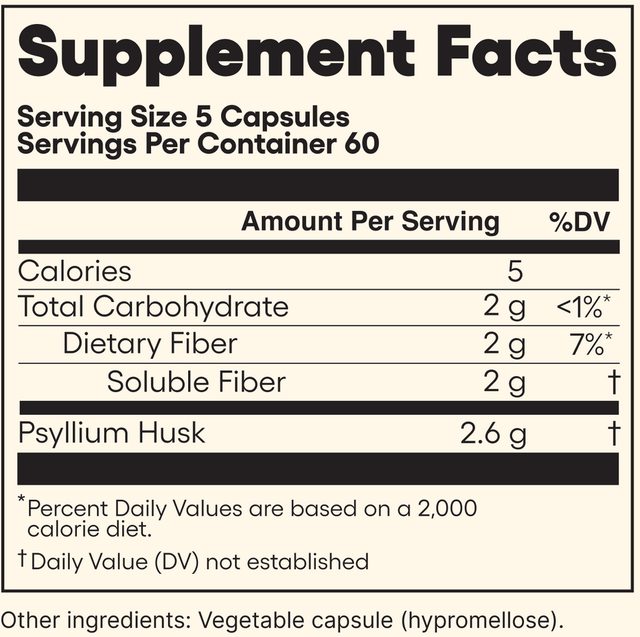
Physician's Choice, which publishes this site, makes fiber supplements; its online store listed no magnesium product on Oct 22, 2026. Its Psyllium Husk Fiber panel gives 2 g of soluble fiber and 2.6 g of psyllium husk for a 5-capsule serving, and its Easy Mix Fiber panel lists 6 g of fiber, all soluble, from soluble corn fiber and guar fiber per heaping spoonful.11
None of the studies cited here used either product, and neither one is set against magnesium on this page.
In brief
Magnesium makes you poop because the part you do not absorb holds water in the bowel: citrate and hydroxide work within hours as saline laxatives, oxide raised bowel movements in two small trials, and glycinate is the gentle form. Keep supplements within 350 mg a day unless told otherwise, space other medicines, and ask a doctor first with kidney disease.
How we reported this
- Reader questions
- In a pull of 1,145 public Reddit posts (250 communities, Sep 12 to Oct 12, 2026), 15 mentioned magnesium, 9 of them in posts about constipation.
- Search question
- "Does magnesium make you poop?" with its neighbors, "magnesium for constipation," "magnesium citrate for constipation," "can magnesium cause constipation" and "does magnesium glycinate make you poop," plus the follow-up AI assistants run on citrate, oxide, glycinate and how fast each works.
- Label facts
- The Psyllium Husk Fiber and Easy Mix Fiber panels, as their label images on physicianschoice.com showed them on Oct 22, 2026.
- Sources
- Ten public sources, each fetched and read on Oct 22, 2026: NIH's magnesium fact sheet, FDA's laxative monograph, three MedlinePlus drug pages, the 2023 AGA and ACG guideline, a trial and a review through PMC, and pages from Cleveland Clinic and NIDDK. Brand names in the sources are left out.
- House wording
- Three lines come from Physician's Choice word for word: the fluid line with fiber, the constipation line under "What should you try before magnesium?", and the line on pregnancy and immunity beside this answer.
Magnesium and bowel questions, answered
Does magnesium glycinate make you poop?
Not in any trial, and the sources call it the gentle form. Cleveland Clinic says glycinate tends to be easy to absorb and gentle on the stomach, and it is not among the forms NIH lists as most often causing diarrhea. The 2023 guideline adds that its effect on constipation has never been tested in a randomized trial.
How long does magnesium citrate take to work?
Usually 30 minutes to 6 hours, MedlinePlus says, and FDA's rules have saline laxative labels say ½ to 6 hours. Take each dose with a full 8-ounce glass of liquid, keep other medicines at least 2 hours apart, and do not use it for more than 1 week unless a doctor tells you to.
Can magnesium cause constipation?
No source cited here names constipation as a magnesium side effect. What they report is the reverse: NIH warns that large supplement or medicine doses commonly bring diarrhea, along with nausea and cramping, and MedlinePlus lists loose, watery or more frequent stools for magnesium citrate.
Is it safe to take magnesium every day for constipation?
Not as a laxative without a doctor. MedlinePlus says not to use magnesium citrate or hydroxide for more than 1 week unless a doctor says so. NIH caps supplement magnesium at 350 mg a day for adults, and the 2023 guideline notes that the oxide trials lasted only 4 weeks.
Does magnesium from food make you poop?
Not in the way a laxative does, by NIH's account. It says magnesium from food does not pose a health risk in healthy people because the kidneys remove the excess in urine, and it ties diarrhea to high doses from supplements or medicines. Its upper limit leaves food out entirely.
Sources
- NIH Office of Dietary Supplements. Magnesium: fact sheet for health professionals. Updated Jan 6, 2026. ods.od.nih.gov
- US Food and Drug Administration. OTC Monograph M007: Laxative drug products for over-the-counter human use. Posted May 2, 2023. accessdata.fda.gov (PDF)
- MedlinePlus Drug Information. Magnesium citrate. Last revised Apr 15, 2019. medlineplus.gov
- MedlinePlus Drug Information. Magnesium hydroxide. Last revised Apr 15, 2019. medlineplus.gov
- MedlinePlus Drug Information. Magnesium oxide. Last revised Jun 20, 2024. medlineplus.gov
- Chang L, Chey WD, Imdad A, et al. American Gastroenterological Association-American College of Gastroenterology clinical practice guideline: pharmacological management of chronic idiopathic constipation. Gastroenterology. 2023;164(7):1086-1106. pmc.ncbi.nlm.nih.gov/articles/PMC10542656
- Mori S, Tomita T, Fujimura K, et al. A randomized double-blind placebo-controlled trial on the effect of magnesium oxide in patients with chronic constipation. Journal of Neurogastroenterology and Motility. 2019;25(4):563-575. pmc.ncbi.nlm.nih.gov/articles/PMC6786451
- Mori H, Tack J, Suzuki H. Magnesium oxide in constipation. Nutrients. 2021;13(2):421. Two of its three authors report payments from drug companies. pmc.ncbi.nlm.nih.gov/articles/PMC7911806
- Cleveland Clinic Health Essentials. Magnesium for sleep: does it really work? With integrative medicine specialist Naoki Umeda, MD. Published Sep 4, 2026. health.clevelandclinic.org
- NIDDK (National Institutes of Health). Treatment for constipation. Last reviewed May 2018. niddk.nih.gov
- Physician's Choice product labels: Psyllium Husk Fiber (label 3.0.0) and Easy Mix Fiber (label 3.1.0), label images on physicianschoice.com. Read Oct 22, 2026. The label figures on this page are copied from those panels.