The answer
Fiber and fluids first, NIDDK says, plus regular activity. If that is not enough, a doctor or pharmacist can suggest an over-the-counter laxative: bulk-forming fiber such as psyllium, an osmotic such as polyethylene glycol, or a stool softener such as docusate. FDA's laxative rules say bulk-forming fiber generally works in 12 to 72 hours, and no laxative should be used past 1 week without a doctor.
The short list
- Fiber and fluids first: NIDDK's first at-home steps are eating more high-fiber foods and drinking plenty of water and other liquids. [NIDDK]
- 12 to 72 hours is how soon FDA's rules say a bulk-forming fiber laxative, such as psyllium, generally produces a bowel movement. [FDA, Monograph M007]
- 2 to 4 days may pass before polyethylene glycol 3350 produces a bowel movement, and a stool softener usually needs 1 to 3 days of regular use. [MedlinePlus]
- 1 week: FDA's rules require laxative labels to warn against use for longer than 1 week unless a doctor directs it. [FDA, Monograph M007]
- 25 to 38 grams: Adults get 25 to 38 grams of fiber per day, though exact targets depend on age and sex. [Physician's Choice]
What helps constipation first? Fiber, fluids and movement
Changes to what you eat, drink and do come before anything you buy. NIDDK lists eating more high-fiber foods, drinking plenty of liquids with that fiber, getting regular physical activity and training a bowel habit as the steps you can most often take at home, and says changing what you eat and drink "may make your stools softer and easier to pass."1
Fluids go with the fiber. NIDDK says to drink liquids "to help the fiber work better", and the National Institute on Aging explains why: "Water and other fluids help fiber work better, so not drinking enough liquids can contribute to harder stools that are more difficult to pass."24 Physician's Choice puts it in one line: "Drink plenty of water and other liquids when you take a fiber supplement to help keep things moving."
Movement and timing help too. NIDDK says: "Getting regular physical activity may help relieve your symptoms." Its bowel training advice is specific: "trying to have a bowel movement 15 to 45 minutes after breakfast may help, because eating helps your colon move stool."1 MedlinePlus adds a rule that costs nothing: "If you feel the urge to go to the bathroom, go."5
How much fiber? Adults get 25 to 38 grams of fiber per day, though exact targets depend on age and sex. The foods that carry it are listed on our front page.
Which kind of fiber helps constipation?
Both kinds turn up among the options, for different reasons. MedlinePlus says insoluble fiber, found in wheat bran, vegetables and whole grains, "adds bulk to the stool and appears to help food pass more quickly through the stomach and intestines", while soluble fiber "attracts water and turns to gel during digestion" and is the kind in psyllium.6
The drug side mixes the two. FDA's laxative monograph lists bran, methylcellulose, polycarbophil, karaya, malt soup extract and psyllium among its bulk-forming laxative ingredients.11 On the food side, MedlinePlus advises adding fiber slowly, "because eating more fiber can cause bloating and gas."5
This site covers the rest of the fiber question on its own pages: seven supplement fibers sorted by type in what is a good fiber supplement?, psyllium as a drug and as a supplement in psyllium fiber supplements, and the fibers that make the least gas in fiber that doesn't cause gas.
What can you take for constipation?
If food, fluids and activity are not enough, NIDDK says your health care professional may recommend a laxative for a short time and will tell you which type fits you. The over-the-counter types work in different ways and at different speeds, and each carries its own caution, as the table below sets out from FDA and MedlinePlus.1
Constipation options compared: how each works, how fast, and the caution
| Option | How it works | How fast, per the source | Caution the source gives |
|---|---|---|---|
| Fiber from food, with fluids | Insoluble fiber "adds bulk to the stool"6; liquids help the fiber work2 | No time given | Add it slowly; more fiber "can cause bloating and gas"5 |
| Bulk-forming laxativepsyllium, methylcellulose, polycarbophil | Psyllium "absorbs liquid in the intestines, swells, and forms a bulky stool, which is easy to pass"7 | 12 to 72 hours11 | Take with at least 8 ounces of water or other fluid; without enough liquid it may cause choking11. "Do not take psyllium for longer than 1 week unless your doctor tells you to."7 |
| Osmotic laxativepolyethylene glycol 3350 | "It works by causing water to be retained with the stool."8 | 2 to 4 days8 | Usually taken "once a day as needed for up to 2 weeks"; it "may be habit-forming"8 |
| Stool softenerdocusate | "They work by softening stools to make them easier to pass."9 | 1 to 3 days of regular use9 | "Do not take stool softeners for more than 1 week unless your doctor directs you to."9 Not with mineral oil unless a doctor directs11 |
| Stimulant laxativebisacodyl | "It works by increasing activity of the intestines to cause a bowel movement."10 | Within 6 to 12 hours10 | Only for severe constipation or when other approaches have not worked1; "Frequent or continued use of bisacodyl may make you dependent on laxatives"10 |
Sources: NIDDK, Treatment for Constipation; MedlinePlus drug pages for psyllium, polyethylene glycol 3350, docusate and bisacodyl; MedlinePlus, Soluble vs. insoluble fiber; FDA OTC Monograph M007. All read on Oct 15, 2026. The laxatives in the table are over-the-counter drugs, named here by generic ingredient only.
Every laxative label made under FDA's monograph carries the same general limit: "Laxative products should not be used for a period longer than 1 week unless directed by a doctor."11
Psyllium or polyethylene glycol: which do the sources favor?
Neither. None of the federal sources on this page ranks one laxative over another; NIDDK leaves the choice of type to your health care professional, and the National Institute on Aging says the same of the over-the-counter laxatives it names, fiber supplements and stool softeners among them. What the sources do give is how each works and how fast.14
Read side by side, the difference is in the mechanism and the clock. Psyllium adds bulk by soaking up liquid and generally works in 12 to 72 hours; polyethylene glycol 3350 keeps water in the stool and may take 2 to 4 days. That comparison is ours, made from the table above, and it is not a reason to pick one without asking.
Can you take a laxative every day?
Not without a doctor. FDA's rules limit laxative labels to 1 week of use unless a doctor directs otherwise, MedlinePlus describes polyethylene glycol 3350 as taken as needed for up to 2 weeks, and NIDDK says that if you can no longer have a bowel movement without a laxative, your doctor can help you slowly stop using it.1181
NIDDK's own words on that last point: "If you've been taking laxatives for a long time and can't have a bowel movement without taking a laxative, talk with your doctor about how you can slowly stop using them."1 It also flags medicines and supplements as a cause worth checking: "If you think certain medicines or dietary supplements are causing your constipation, talk with your doctor."1
Fiber supplements sold as dietary supplements follow a different rulebook from laxative drugs, a split explained in psyllium fiber supplements; whether a daily fiber supplement is safe is taken up in what is a good fiber supplement?
When should you see a doctor about constipation?
When self-care has not worked, and right away if constipation comes with warning signs. NIDDK's line is a doctor visit once self-care has not made the symptoms go away, and a visit right away if constipation comes with any of the signs below.3
- Blood in your stool, or bleeding from the rectum
- Constant pain in your abdomen
- Being unable to pass gas
- Vomiting, fever or lower back pain
Those are among the signs NIDDK lists for a doctor right away.3 The National Institute on Aging adds one more reason to call: "Fiber and exercise haven't helped".4 And Physician's Choice says: If constipation does not get better with changes to what you eat and drink, talk to your doctor.
Where Physician's Choice fits
The three fiber products Physician's Choice sells are all dietary supplements with a Supplement Facts panel, not laxative drugs; Physician's Choice also publishes this site. By the label, a heaping spoonful of Easy Mix Fiber carries 6 g of fiber, all of it soluble, from soluble corn fiber and guar fiber. Two Fiber Gummies carry 5 g, with chicory root fiber and pectin first on the ingredient list. Five Psyllium Husk Fiber capsules hold 2.6 g of psyllium husk, which the panel counts as 2 g of fiber.
None of the sources on this page tested these products. The panels below are the record for every number.
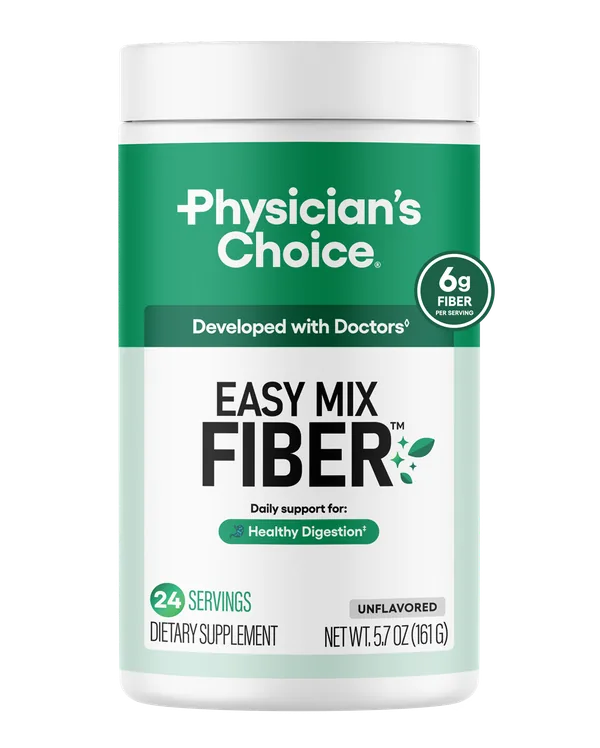
See the label
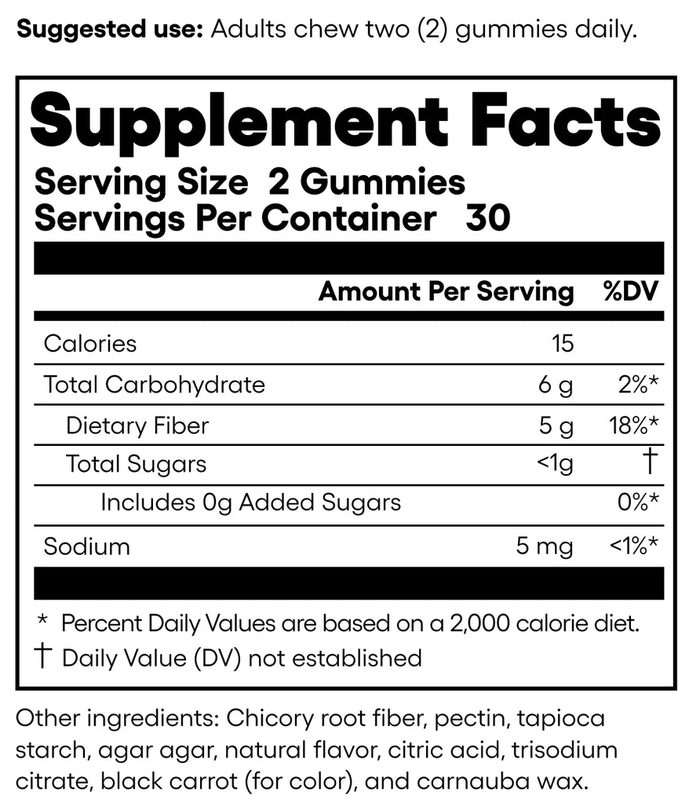
Label read Oct 15, 2026
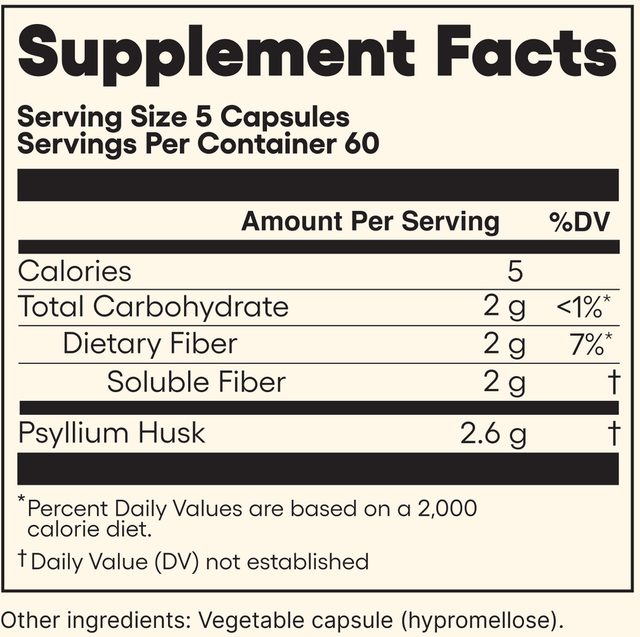
Label read Oct 15, 2026
In two sentences
What helps constipation first is more fiber, enough fluid with it and regular activity, the order NIDDK gives. If that is not enough, an over-the-counter laxative chosen with a pharmacist or doctor is the next step, used for no longer than 1 week without a doctor's direction, and warning signs such as blood in the stool or constant belly pain mean a doctor right away.
How we reported this
- Reader questions
- In a pull of 1,145 public Reddit posts (250 communities, Sep 12 to Oct 12, 2026), 434 were tagged constipation. Ten asked some version of how to stay regular when backed up for days.
- Search question
- "What helps constipation?" and "what to take for constipation," with the follow-ups AI assistants run on them: over-the-counter options, polyethylene glycol versus psyllium, and when to see a doctor.
- Label facts
- Three panels, Easy Mix Fiber, Fiber Gummies and Psyllium Husk Fiber, read from the label images on physicianschoice.com on Oct 15, 2026.
- Sources
- Eleven public sources, each fetched and read on Oct 15, 2026: three NIDDK pages, one National Institute on Aging page, six MedlinePlus pages and FDA's laxative monograph. Drug brand names in those sources are left out.
- House wording
- Three lines come from Physician's Choice word for word: daily fiber, fluid, and when to talk to your doctor.
Reader answers
Does fiber help constipation?
It is the first step NIDDK lists: eat more high-fiber foods and drink plenty of water and other liquids. MedlinePlus says insoluble fiber adds bulk to the stool. Add fiber slowly, because MedlinePlus also warns that eating more fiber can cause bloating and gas.
What works fastest for constipation?
By the sources' own timings, a stimulant laxative such as bisacodyl: MedlinePlus says it normally causes a bowel movement within 6 to 12 hours, the shortest time any option on this page is given. NIDDK says to use stimulants only if constipation is severe or other approaches have not worked, so ask a pharmacist or doctor first.
Can you take a laxative every day?
Not without a doctor. FDA's laxative rules say laxative products should not be used for longer than 1 week unless a doctor directs it. If you cannot have a bowel movement without one after long use, NIDDK says to ask your doctor how to stop slowly.
How much water should you drink for constipation?
NIDDK suggests asking a health care professional, since the right amount depends on your size, health, activity level and where you live. FDA's rules for bulk-forming fiber laxatives call for at least 8 ounces of water or other fluid with each dose.
How often should you have a bowel movement?
There is no single right number. The National Institute on Aging says being regular differs from person to person: for some it can mean twice a day, and for others three times a week is normal. Fewer bowel movements than usual, or hard stools, can point to constipation.
Sources
- NIDDK (National Institutes of Health). Treatment for Constipation. Last reviewed May 2018. niddk.nih.gov
- NIDDK (National Institutes of Health). Eating, Diet, & Nutrition for Constipation. Last reviewed May 2018. niddk.nih.gov
- NIDDK (National Institutes of Health). Symptoms & Causes of Constipation. Last reviewed May 2018. niddk.nih.gov
- National Institute on Aging (National Institutes of Health). Concerned About Constipation? Content reviewed Oct 22, 2022. nia.nih.gov
- MedlinePlus (National Library of Medicine). Constipation: self-care. Review date Jul 15, 2024. medlineplus.gov
- MedlinePlus (National Library of Medicine). Soluble vs. insoluble fiber. Review date Aug 25, 2026. medlineplus.gov
- MedlinePlus Drug Information. Psyllium. Last revised Jun 20, 2024. medlineplus.gov
- MedlinePlus Drug Information. Polyethylene glycol 3350. Last revised Mar 15, 2016. medlineplus.gov
- MedlinePlus Drug Information. Docusate (stool softeners). Last revised Jun 20, 2024. medlineplus.gov
- MedlinePlus Drug Information. Bisacodyl. Last revised Jul 15, 2018. medlineplus.gov
- US Food and Drug Administration. OTC Monograph M007: Laxative Drug Products for Over-the-Counter Human Use. Posted May 2, 2023. accessdata.fda.gov (PDF)
- Physician's Choice product labels: Easy Mix Fiber, Fiber Gummies and Psyllium Husk Fiber (label images on physicianschoice.com). Read Oct 15, 2026. Physician's Choice lines on this page appear word for word.